
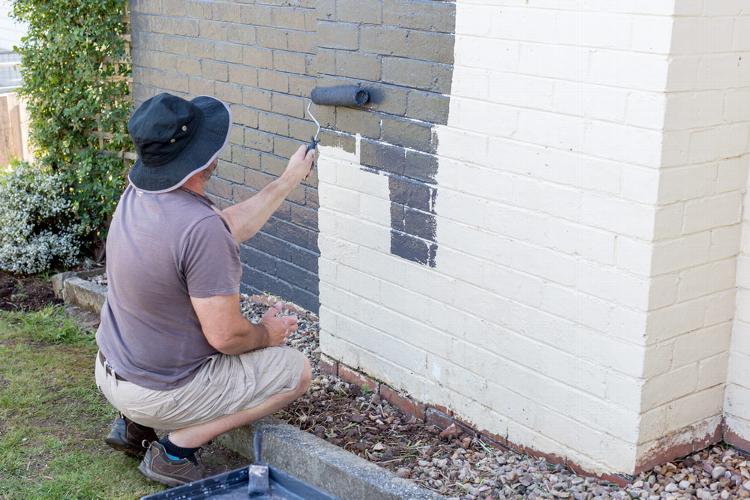
Can You Paint Over Old Exterior Paint?
Quick answer: Can you paint over old exterior paint? Yes - but only when the existing coating is clean, dry, well bonded and compatible with the new product. If the old paint is flaking, blistering, chalking heavily or trapping moisture in the wall, painting over it will fail within one to three years. In those cases the old coating needs removing or stabilising first, which is specialist work on brick, stone and render.
It is one of the most common questions homeowners, facilities managers and property agents ask before booking a decorator: can you paint over old exterior paint, or does everything need stripping back first? The honest answer is that it depends entirely on the condition of what is already on the wall - and on what that wall is made of.
A fresh coat will only ever be as strong as the layer underneath it. Paint does not bond to the masonry; it bonds to the previous coating. If that coating has lost its grip, the new paint inherits the problem, and the money spent on it disappears with the first hard frost. This guide sets out exactly when repainting works, when it does not, and what preparation is needed either way.
What Happens If You Paint Over Old or Failing Exterior Paint?
If you paint over old or failing exterior paint, the new coating bonds to a weak layer and fails at the same rate as the paint beneath it - usually within one to three years, and often faster on exposed elevations. The new paint does not repair the old film; it simply sits on top of it and shares its fate.
The failure follows a predictable pattern. The new coat looks excellent for the first season. Moisture then works through hairline cracks or up from the substrate, collects behind the original film, and pushes both layers away from the wall together. What began as a small patch of flaking becomes a whole elevation, and the repair is now more expensive than the original job would have been done properly.
The Three Ways Paint Failure Shows Itself
Delamination and sheet peeling
Both coats lift away as one piece, often in large flakes that curl at the edges. This indicates an adhesion failure at the original paint-to-substrate interface, not at the new paint layer. Once it starts, it spreads across the elevation because the underlying bond is uniformly weak.
Blistering and bubbling
Raised bubbles form under the surface as trapped moisture or vapour tries to escape. On rendered and solid-wall properties this is frequently caused by an impermeable coating sealing in damp that the wall needs to breathe out. Piling another impermeable layer on top makes it markedly worse, and is a common route to damp problems behind painted brickwork.
Cracking, crazing and alligatoring
A network of fine cracks appears where a harder, less flexible new coat has been applied over an older, more brittle one. The layers expand and contract at different rates through the seasons and tear themselves apart. This is common where a modern acrylic masonry paint has been applied over an aged oil-based or cement-based coating.
What Are the Risks of Painting Over Failing Exterior Paint?
The main risks of painting over failing exterior paint are wasted cost, accelerated moisture damage to the masonry beneath, and a far more expensive remedial job later. On older and heritage buildings there is also a genuine risk of causing permanent structural harm to the substrate.
These are not cosmetic concerns. Sealing a breathable wall behind a failing film changes how the whole building manages water. Can you paint over old exterior paint on a wall in that condition? Only by accepting the consequences below.
- Trapped moisture and frost damage. Water that cannot evaporate outwards sits in the outer few millimetres of brick or stone. When it freezes it expands, and the face of the masonry spalls away. This damage is irreversible - the brick face does not grow back.
- Salt migration and efflorescence. Soluble salts carried by trapped moisture crystallise behind the paint film, forcing it off the wall and eroding soft stone and lime mortar joints.
- Hidden defects go unnoticed. Painting over a wall conceals cracked render, failed pointing and leaking rainwater goods. Those defects continue to worsen out of sight, and by the time they resurface the repair scope has grown considerably.
- Compounding cost. Every additional coat makes eventual removal harder and more expensive. A wall carrying four or five historic layers takes significantly longer to strip than one carrying two.
- Lead paint disturbance. Coatings applied before the early 1990s may contain lead. Sanding or abrading them without proper controls creates a health hazard governed by the Control of Lead at Work Regulations 2002 and should not be tackled casually.
- Devalued heritage fabric. On listed buildings and in conservation areas, inappropriate coatings can constitute unauthorised works and may need to be removed at the owner's expense.
The Risk Of Painting Over Exterior Paint Is Highest on Solid-Wall and Heritage Properties
Buildings constructed before roughly 1919 generally have solid walls with no cavity, built with lime mortar and designed to absorb and release moisture freely. Modern plastic-based masonry paints are effectively a raincoat over a material that needs to breathe. Where a previous owner has already applied one, adding a second is one of the most damaging things that can be done to the fabric. We look at this in more detail in our guide to whether masonry paint is bad for brick and stone.
Removal by a controlled, low-pressure method is almost always the correct answer - which is why specialist brick and masonry paint removal exists as a distinct discipline from decorating.
What Is the Life Expectancy of Exterior Paint?
The life expectancy of exterior paint in the UK is typically 5 to 15 years, depending on the coating type, the surface it sits on and how exposed the elevation is. Masonry paint on render lasts longest; paint on timber and metal has the shortest service life.
These figures assume the coating was applied to a properly prepared, sound surface. Applied over failing paint, every figure below should be reduced by at least half.
|
Coating and surface |
Typical life expectancy |
|---|---|
|
Silicone or mineral masonry paint on sound render |
12–20 years |
|
Quality acrylic masonry paint on render or brick |
8–15 years |
|
Standard trade masonry paint |
5–10 years |
|
Limewash on historic masonry |
4–8 years (refreshed, not stripped) |
|
Exterior gloss or satinwood on timber |
3–7 years |
|
Woodstain on cladding or joinery |
2–5 years |
|
Paint on metalwork, railings and rainwater goods |
5–10 years |
What Shortens the Life of Exterior Paint
- Orientation. South and west elevations take the UV and driving rain in most of the UK and fail first. North-facing walls stay damp and grow algae and lichen instead.
- Coastal and exposed sites. Salt-laden air and wind-driven rain can cut service life by a third or more.
- Poor preparation. The single biggest factor. A well-chosen paint applied to a dirty or unstable surface will underperform a cheap paint applied to a properly prepared one.
- Biological growth. Algae, moss and lichen hold moisture against the film and their root structures physically break the surface down.
- Untreated defects. Blocked gutters, cracked render and failed pointing feed water behind the coating continuously.
When You Can Paint Over Old Exterior Paint
You can paint over old exterior paint when the existing coating is fully bonded, clean, dry, chemically compatible with the new product and covering less than around 15 to 20 per cent failed area. In these conditions, repainting is a sound and cost-effective decision.
Work through the following checks before committing. If the wall passes all of them, repainting over the existing coating is appropriate.
The Adhesion Test
Press a strip of strong adhesive tape firmly onto the paint, leave it for a minute, then pull it away sharply. If the tape lifts clean, the bond is sound. If it brings paint with it, the coating has already lost adhesion and will take your new paint with it too.
The Chalking Test
Rub a dark cloth across the surface. A light dusting of pigment is normal on aged masonry paint and can usually be washed off and stabilised. Heavy, powdery residue that coats the cloth indicates the binder has broken down entirely - that surface needs a stabilising primer at minimum, and often full removal.
The Compatibility Check
Match the new coating to the old one and to the wall behind it.
- Water-based masonry paint generally goes over sound water-based masonry paint without issue.
- A breathable mineral or silicate paint should not be applied over an impermeable plastic coating - it cannot bond properly and the breathability benefit is lost.
- Never assume a modern paint will sit happily on an unidentified historic coating. Where the existing product is unknown, a test patch on a discreet elevation is essential.
The Moisture Check
The substrate must be genuinely dry, not merely dry to the touch. Masonry that has been rain-soaked typically needs several dry days before it is ready, and rendered walls longer. Painting a damp wall guarantees blistering regardless of how good the preparation was.
When You Cannot Paint Over Old Exterior Paint
You cannot paint over old exterior paint when it is peeling, blistering, heavily chalking, contaminated with biological growth, or trapping moisture in a wall that needs to breathe. In these situations the coating must be removed or fully stabilised before any new paint is applied.
The following conditions are absolute stop signs. Painting over any of them is money spent twice. If you are unsure how far gone your coating is, our guide to the early warning signs that exterior paint is failing covers what to look for in more detail.
Clear Signs Old Exterior Paint Must Be Removed Before Repainting
- Widespread flaking or peeling. Once more than about a fifth of the elevation has lost adhesion, spot repairs will always show through and full removal becomes the better-value option.
- Blistering across the surface. A moisture problem the paint is not causing but is certainly worsening. Painting over it seals the fault in.
- Bare patches showing through. Multiple bare areas mean the coating has already lost the argument with the weather.
- Established algae, moss or lichen. Organic growth must be killed and removed, not painted over. Paint applied on top of it will lift as the growth breaks down beneath.
- Efflorescence or salt crystals. White crystalline deposits confirm active moisture movement through the wall that must be resolved first.
- Impermeable paint on a solid or heritage wall. The right outcome is removal and a breathable replacement - not another layer.
- Multiple historic layers. Where several generations of coating have built up, total accumulated thickness becomes unstable and the whole system needs stripping.
Why Sanding and Jet Washing Are Not the Answer
Two common DIY approaches cause more harm than the paint did. Mechanical sanding creates dust that may contain lead on pre-1990s coatings, and it abrades the face of soft brick and stone. High-pressure jet washing drives water deep into the substrate, erodes lime mortar joints and blasts the face off weathered masonry - leaving a wall that is wetter, softer and more damaged than before, with the paint often still attached.
Controlled removal on brick, stone and render is done with heat and low pressure rather than force. Systems such as DOFF, ThermaTech and TORC use high-temperature, low-pressure steam or a gentle inert medium to lift coatings away while leaving the substrate intact - which is why UK conservation bodies specify them on listed buildings. Our explainer on what DOFF cleaning is and how it works sets out the process step by step.
What Preparation Is Required Before Painting an Exterior Wall?
Preparation before painting an exterior wall requires cleaning, killing biological growth, removing all unstable paint, repairing defects, allowing full drying time and applying the correct primer or stabiliser. Preparation typically accounts for 70 to 80 per cent of the labour on a well-executed exterior repaint.
Skipping or compressing these stages is the single most common reason exterior paint fails early - and the reason people end up asking again in three years whether you can paint over old exterior paint that has already failed once.
Stage One: Survey and Test
- Identify the substrate - brick, stone, render, pebbledash, timber or metal - and the existing coating type.
- Carry out adhesion and chalk testing across multiple elevations, since condition varies enormously between them.
- Take moisture readings, particularly at low level and around openings.
- Check whether the property is listed or in a conservation area, and whether consent is required.
Stage Two: Clean and Treat
- Remove dirt, atmospheric pollution and surface contamination using an appropriate low-pressure method.
- Apply a biocidal wash to kill algae, moss and lichen at root level, and allow the specified dwell time. Removing growth without treating it means it returns beneath the new paint.
- Rinse thoroughly and allow the wall to dry fully.
Cleaning is not optional
Paint applied over a dirty wall bonds to the dirt rather than the surface. A professional render cleaning or masonry clean before repainting is one of the highest-return steps in the whole process, and it also reveals defects that were previously hidden under grime. Before reaching for a pressure washer yourself, it is worth reading whether it is safe to clean render yourself - the wrong method at this stage causes damage that no amount of paint will hide.
Stage Three: Remove and Repair
- Scrape back all loose, flaking and blistered material to a firm edge.
- Feather the edges of sound paint so repairs do not telegraph through the finish.
- Rake out and repoint failed mortar joints, using a mortar compatible with the original - lime for lime-built walls.
- Repair cracked or hollow render and allow new material to cure fully, which can take several weeks.
- Clear gutters and downpipes and fix any leaks. Painting a wall that is being repeatedly soaked from above is pointless.
Stage Four: Prime and Protect
- Apply a stabilising primer to chalky or porous areas so the topcoat has something consistent to bond to.
- Spot-prime any bare substrate exposed during preparation.
- Mask windows, doors, rainwater goods and paving.
- Check conditions before starting - most masonry paints need surface temperatures above 5°C, no frost forecast overnight, and a dry window either side of application.
How Long Will New Paint Last Over Old Exterior Paint?
New paint applied over sound, properly prepared old exterior paint will last close to its full expected life - typically 8 to 15 years for quality masonry paint. Applied over failing paint, the same product will usually last one to three years before showing the same defects again.
The difference is entirely down to what is underneath. A coating system is only as durable as its weakest layer, and the new paint cannot outperform the bond it is relying on. This is the practical reason the answer to "can you paint over old exterior paint" is never a simple yes - the honest answer is a question about durability, not about whether the brush will physically work.
What You Can Realistically Expect
- Sound existing paint, full preparation: 8–15 years on masonry, close to the manufacturer's stated life.
- Sound existing paint, minimal preparation: 4–7 years, with early failure around openings and at low level.
- Failing existing paint, painted over regardless: 1–3 years, and the eventual removal job is now larger and dearer.
- Old coating fully removed, substrate cleaned and repaired: Full service life, with the additional benefit that the wall can be left unpainted if the masonry beneath is attractive.
Paint stripping before repainting is often the cheaper one over time
Removing an old coating costs more on day one than painting over it. Across a fifteen-year horizon it frequently costs less, because it breaks the cycle of repainting every two to three years and prevents the underlying masonry damage that eventually demands structural repair. On brick and stone buildings, many owners find they prefer the cleaned substrate to any paint finish and never repaint at all.
Painting Over vs Paint Removal: Which Is Better?
Painting over is the better choice when the existing coating is sound and the wall is a modern cavity-built structure; paint removal is the better choice when the coating is failing, when the building has solid walls, or when moisture is being trapped in the masonry. Repainting treats the appearance of the wall. Removal treats the cause of the problem.
Most people face this decision with a rough idea of the cost of each and no clear sense of which one their building actually needs. The distinction is simpler than it looks: repainting is a maintenance decision, while removal is a building-fabric decision. Our full guide to how exterior paint affects brickwork and why removal protects the building explains the structural side of that argument in depth.
When Painting Over Is the Right Choice
Painting over makes sense when the coating has failed cosmetically rather than structurally, and when the wall behind it is not being harmed by the presence of paint.
- The building is modern cavity-wall construction with no moisture problems.
- The existing coating passes adhesion and chalk testing across all elevations.
- The wall has been painted for years without damp appearing internally.
- The substrate is render or blockwork rather than soft handmade brick or natural stone.
- The finish is simply tired, faded or the wrong colour.
- Budget is the deciding constraint and the wall is genuinely sound.
When Paint Removal Is the Right Choice
Paint removal becomes the better option once the coating is either failing or actively harming the wall - at which point repainting only delays the same conversation by two or three years.
- More than roughly a fifth of the surface is peeling, blistering or bare.
- The property is solid-wall, pre-1919, lime-mortared or listed.
- Internal damp patches have appeared since the exterior was painted.
- Efflorescence, spalling brick faces or crumbling mortar are visible.
- Several generations of coating have built up over the years.
- The brick or stone beneath is attractive and worth exposing.
- The wall has already been repainted once and failed again quickly.
Painting Over vs Paint Removal Compared
|
Consideration |
Painting over |
Paint removal |
|---|---|---|
|
Upfront cost |
Lower |
Higher |
|
Cost across 15 years |
Higher if the coating is failing |
Usually lower - ends the repaint cycle |
|
Effect on breathability |
Reduces it further with each coat |
Restores natural moisture movement |
|
Suitability for heritage walls |
Generally unsuitable |
Usually the recommended route |
|
Hidden defects |
Concealed and left to worsen |
Exposed so they can be repaired |
|
Expected result |
1–3 years over failing paint, 8–15 over sound paint |
Permanent, with the option never to repaint |
|
Disruption |
Minimal |
Access equipment and containment required |
What paint removal achieves that repainting cannot
Repainting can only ever change what the wall looks like. Removal changes how the wall behaves. Once the coating is gone, absorbed rainwater can evaporate outwards again instead of collecting behind a film, internal vapour pressure drops, freeze–thaw risk falls sharply and salts stop crystallising beneath the surface. On brick and stone buildings that is a structural improvement, not a decorative one.
The middle option: remove, then recoat with a breathable system
Removal does not have to mean leaving the wall bare. Where a painted finish is wanted or needed - for uniformity across an elevation, or because the brickwork beneath is patchy after previous repairs - stripping the old impermeable coating and replacing it with a mineral or silicate system gives the appearance without sealing the wall. This is often the right answer on rendered properties and on brickwork that has been painted for decades.
When Should You Call a Professional For Exterior Paint Removal?
Call a professional as soon as the existing coating shows widespread failure, the building is older than roughly a century, the property is listed, or you cannot confidently identify what is already on the wall. At that point the question is no longer whether you can paint over old exterior paint, but whether the existing coating should stay at all - and that assessment needs specialist eyes.
Situations That Always Warrant a Specialist
- Listed buildings and conservation areas. Method statements, consent and conservation-approved equipment are typically required, and getting it wrong carries real consequences.
- Solid-wall properties built before 1919. Breathability decisions here determine the long-term health of the fabric.
- Suspected lead-containing coatings. Pre-1990s paint requires containment, controlled removal and correct waste disposal.
- Working at height. Anything above ground-floor level needs proper access equipment, trained operatives and a risk assessment.
- Soft or weathered stone. Sandstone, limestone and aged handmade brick are easily and permanently damaged by the wrong method.
- Large or commercial elevations. Consistency across a big façade is difficult to achieve without the right equipment.
- Any wall where you simply do not know. A survey costs nothing and prevents an expensive mistake.
What a Specialist Exterior Cleaning Company Does Differently
Correct diagnosis before any work begins
An experienced surveyor identifies the substrate, the coating type, the moisture pattern and the actual cause of failure - which is frequently a defect elsewhere on the building rather than the paint itself. Treating the symptom without the cause guarantees a repeat.
Substrate-appropriate removal methods
Different walls need different approaches. Low-pressure superheated steam suits delicate heritage stone; a gentle inert-medium system handles stubborn multi-layer coatings; poultice systems work where wetting must be minimised. Choosing between them is a judgement built on experience, not a setting on a machine.
Test panels and evidence
Reputable contractors carry out a trial area first, so you can see the result and agree the method before the full elevation is committed. This is standard practice on heritage work and good practice everywhere else.
Compliance, insurance and safe working
Risk assessments, method statements, correct access equipment, environmental containment and appropriate waste handling are all part of a professional job - and all absent from a DIY approach.
Not Sure Whether to Repaint or Strip Back?
Ultra Cleaning Services has spent over twenty years removing failing masonry paint and preparing exteriors across Hampshire, Winchester and the south of England. We use conservation-approved DOFF, ThermaTech and TORC systems on everything from listed stonework to modern render, and every project starts with a free, no-obligation survey.
Exterior Paint Removal Contact Us
or call 0800 086 8780 to arrange yours.
Frequently Asked Questions
Can you paint over old exterior paint without removing it?
Yes, provided the existing coating passes an adhesion test, is not heavily chalking, carries no biological growth and is compatible with the new product. If it fails any of those checks, removal or full stabilisation is needed first.
Is it better to paint over exterior paint or remove it?
Painting over is better when the existing coating is sound and the building is modern cavity-wall construction. Removal is better when the paint is failing, the walls are solid or heritage, or damp has appeared internally since the wall was painted.
How do I know if my exterior paint is still sound?
Press strong adhesive tape onto the surface and pull it away sharply - if it lifts paint, the bond has failed. Also rub a dark cloth over the wall to check for heavy chalking, and inspect for blistering, flaking, bare patches and green or black growth.
How many coats of paint can a wall take before it needs stripping?
There is no fixed number, but once several generations of coating have built up, the accumulated film becomes too thick and rigid to move with the wall and starts to fail as a whole. Most specialists recommend stripping rather than adding a further layer at that point.
Can I pressure wash exterior paint off myself?
High-pressure washing is not recommended on brick, stone or render. It drives water into the substrate, erodes mortar joints and can permanently damage the face of the masonry, often without removing the paint. Low-pressure steam systems are the appropriate method.
Is it cheaper to repaint or to remove old exterior paint?
Repainting is cheaper initially. Removal is frequently cheaper over ten to fifteen years, because it ends the cycle of repainting failing surfaces every few years and prevents moisture damage to the masonry that would otherwise need structural repair.
What time of year is best for exterior painting in the UK?
Late spring through early autumn, when surface temperatures stay reliably above 5°C, there is no overnight frost forecast and walls have had time to dry out. Cleaning and paint removal can be carried out across a wider window.
Do I need permission to paint or strip a listed building?
Usually yes. Listed building consent is typically required for changes to the external appearance of a listed property, and conservation area rules may also apply. Check with your local authority conservation officer before any work starts.