
How Long Does Render Cleaning Last?
Professional render cleaning will typically last around two to five years when the correct method and treatment are used. However, this is not a fixed guarantee: sunnier, well-ventilated rendered walls may stay clean for longer, while shaded elevations can show early algae regrowth within one or two years.
“Lasting” does not always mean the surface remains completely spotless. General dust, rain marks and airborne dirt can return before significant algae, mould or lichen develops. Each elevation should be assessed individually, as the different sides of one property can weather very differently.
Typical outcomes include:
- Sunny, well-ventilated walls: Often remain visibly clean for three to five years.
- Shaded or north-facing walls: May show green staining again within one to three years.
- Properties near trees or vegetation: Can need earlier attention because of spores, shade and moisture.
- Coastal or exposed properties: May experience faster surface contamination from salt, wind and rain.
At Ultra Cleaning Services, we assess the render, the staining and the surrounding conditions before recommending an appropriate cleaning approach.
What Causes Render Staining to Return?
Render staining usually returns because of the conditions around the building, rather than because the original clean has failed. Organic growth is naturally carried through the air and will return where walls remain damp, shaded or exposed to regular contamination.
Airborne Algae and Fungal Spores
Algae, mould and fungal spores are constantly present in the environment. Once they settle on a damp rendered wall, they can begin to grow again, often causing green stains, black marks or darker patches.
Moisture Held in the Render
Many render systems have a degree of porosity. Where water remains on the surface or within small imperfections, it creates favourable conditions for algae and mould to return.
Shade and Limited Sunlight
North-facing walls, recessed areas and elevations shaded by nearby properties receive less direct sunlight. They dry more slowly after rain, which can encourage recurring staining.
Trees, Plants and Vegetation
Overhanging branches can drop organic material onto rendered walls while also restricting airflow and sunlight. Nearby vegetation can introduce spores and maintain damp conditions around the property.
Gutter, Downpipe and Drainage Issues
Leaking gutters, overflowing hoppers, defective downpipes and poor drainage can leave repeated water tracks on render. These often appear as dark streaks and can lead to concentrated algae growth.
Pollution and General Dirt
Traffic pollution, dust, pollen and airborne dirt can make render look dull or patchy. Green, red and black discolouration may indicate different forms of organic growth, pollution or surface contamination, so the cause should be considered before cleaning begins.
Cracks and Damaged Areas
Cracked, loose or deteriorating render can hold moisture more readily. Cleaning can improve appearance, but persistent damp or damage may need repair or further investigation first.
Render-Cleaning Methods and How Long Results Last
The method used has a major influence on how quickly staining returns. The best way to clean rendered exterior walls depends on the render type, its condition and whether the staining is mainly dirt, pollution, algae, mould or lichen.
Pressure Washing
Pressure washing can remove visible staining quickly, but it is not always suitable for rendered walls.
- It can be effective for some robust surfaces and loose surface dirt.
- It may remove the visible appearance of algae without treating spores beneath or within the surface.
- Excessive pressure can damage delicate, cracked or soft render finishes.
- Results may be shorter-lived if biological growth is not treated after cleaning.
For this reason, pressure should always be carefully controlled, and it should not be viewed as a universal solution for render cleaning.
Steam Cleaning
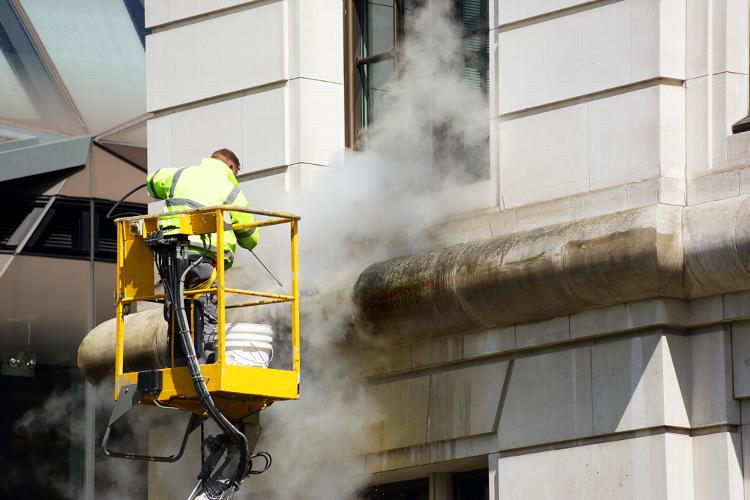
Steam cleaning uses heat with controlled, generally low pressure. It can be useful for certain dirt, pollution residues and surface deposits.
- Heat can assist with the removal of ingrained contamination.
- Controlled pressure reduces the risk associated with aggressive washing.
- Suitability depends on the render system and the nature of the staining.
- A separate treatment may still be needed where algae, mould or other biological growth is present.
Soft Washing and Biocide Treatment
Soft washing uses low-pressure application with specialist cleaning solutions selected for the surface and staining present.
- It targets algae, mould and organic growth rather than only washing away surface marks.
- It can provide longer-lasting results when correctly applied.
- It is often suitable for sensitive render finishes where high pressure would be inappropriate.
- Product selection, dilution, dwell time and rinsing requirements must all be carefully managed.
When people ask, “How long does soft washing last on render?”, the realistic answer is usually several years, but the result will still depend on moisture, shade and maintenance around the property.
Environmental Factors That Affect Render-Cleaning Results
Two neighbouring properties can receive the same standard of professional render cleaning yet stay clean for different lengths of time. The direction of the walls, local weather and property maintenance all affect how soon staining may return.
Wall direction
North-facing walls generally receive less sunlight, meaning they remain damp for longer and are more likely to develop algae.
Shade
Trees, fences, extensions and neighbouring buildings can reduce sunlight and airflow, preventing surfaces from drying fully.
Rainfall and exposure
Areas with frequent rain or consistently humid conditions support organic growth, particularly on more sheltered elevations.
Coastal conditions
Salt, wind-driven rain and airborne moisture can increase surface contamination and leave exterior finishes looking weathered more quickly.
Nearby vegetation
Trees, hedges and climbing plants can shed spores, leaves and organic debris while creating a shaded environment.
Property maintenance
Overflowing gutters, leaking joints and regular water run-off can cause dark staining and green growth in the same areas repeatedly.
Render condition
Cracked, porous or deteriorated render may retain more moisture than a sound, well-maintained surface, allowing staining to establish sooner.
Understanding these factors helps explain why algae may return after render cleaning and why treatment should be tailored to each property rather than applied as a one-size-fits-all service.
How Often Should Render Be Cleaned?
Most properties only need a full professional clean every two to five years, although rendered walls in damp, shaded or heavily vegetated locations may need attention sooner. The right time to clean is based on the condition of the surface, rather than a rigid calendar schedule.
A light maintenance treatment may be appropriate before a complete clean is required, particularly if early green staining is beginning to show on one elevation. Addressing small maintenance problems can also prevent staining from becoming a regular issue.
Factors to consider include:
- Inspect render annually: Look for new staining, dark patches, cracks and areas where water appears to sit.
- Check gutters after autumn and heavy rain: Remove leaves and debris before overflows create streaking on the walls.
- Act when organic growth first becomes visible: Early algae is generally easier to manage than established moss or lichen.
- Arrange an assessment if render is cracked or damaged: Cleaning alone may not resolve issues caused by persistent moisture or failed finishes.
- Monitor shaded elevations separately: A clean south-facing wall does not necessarily mean the north-facing wall needs no attention.
Ultra Cleaning Services can advise whether the property needs a complete clean, a maintenance treatment or repair work before cleaning is considered.
Signs Your Render Needs Cleaning Again
Render does not need to be heavily stained before action is worthwhile. Early identification of organic growth and water-related marks can help preserve the appearance of the property and reduce the likelihood of more extensive staining.
Use this checklist to identify when rendered walls may need attention:
- Green staining: Green marks commonly indicate algae growth, particularly on shaded or north-facing elevations.
- Red, brown or black discolouration: These marks can be associated with different organic growths, pollution deposits, moisture or surface contamination.
- Dark streaks below gutters and downpipes: Streaking often suggests overflowing gutters, leaking joints or repeated water run-off.
- Algae returning in shaded areas: If one side of the building is becoming green again while other elevations remain clean, shade and retained moisture are likely factors.
- Moss or lichen forming: Moss and lichen can become more established over time and may need specialist treatment.
- Dull or patchy-looking render: General dirt, dust and pollution can leave render looking uneven even before heavy biological staining develops.
- Dirt around sills, ledges and details: Architectural features can trap water and debris, creating localised staining.
- A clear contrast between elevations: A sheltered or shaded wall may look substantially darker than an exposed side of the same property.
Cracks, loose render and persistent damp should be investigated rather than cleaned alone. These issues may point to maintenance or repair requirements that need addressing first.
Why Professional Render Cleaning Can Last Longer
Professional render cleaning can produce a more even and durable result because the treatment is selected for the specific surface, rather than relying on a generic cleaning product or high-pressure washer. The aim is to remove staining safely while addressing the cause of recurring growth where possible.
Identifying the Render Type
Different render systems react differently to water pressure, heat and cleaning products. A professional assessment helps identify whether the surface is painted, silicone-based, monocouche, traditional or another finish.
Assessing the Cause of Staining
The visible mark is not always the full issue. We consider whether staining is caused by algae, mould, pollution, gutter overflow, vegetation, poor drainage or a defect in the render itself.
Selecting a Suitable Cleaning Solution
Cleaning products must be suitable for the render and the form of contamination present. This helps target biological growth without unnecessarily affecting the substrate.
Controlling Application Strength and Pressure
The strength of treatment, dwell time, rinsing method and water pressure all need to be controlled. An aggressive approach may cause uneven results or potentially damage the surface.
Treating Biological Growth
Where algae and mould are present, treating the underlying growth can deliver longer-lasting results than simply removing visible marks with water alone.
Protecting the Surrounding Area
Professional cleaning also involves considering windows, doors, plants, paving, drains and nearby surfaces. Safe access to upper elevations and difficult areas is equally important.
Providing Practical Maintenance Advice
Advice about gutter clearing, drainage, vegetation and early intervention can help reduce repeated staining. An incorrect DIY method may deliver a short-lived or uneven clean and, in some cases, harm the render finish.
How to Keep Render Clean for Longer
There is no way to prevent all exterior contamination, but simple maintenance can reduce the conditions that allow algae, mould and dirt to build up. The following steps can help keep exterior render clean for longer after treatment.
Keep gutters and downpipes clear
Remove leaves and debris so rainwater flows away correctly rather than spilling down rendered walls.
Repair leaks and repeated run-off
Investigate dark streaks, overflowing hoppers and dripping pipes before they create regular staining.
Cut back plants and overhanging branches
This can improve sunlight and airflow while reducing the amount of organic debris and spores reaching the render.
Improve airflow around shaded walls where possible
Avoid storing items directly against exterior walls and maintain a clear area around the property.
Deal with early algae growth
Addressing small green patches promptly can be easier than waiting for widespread discolouration.
Repair cracks and damaged render quickly
Sound render is less likely to retain water than cracked or deteriorating areas.
Avoid aggressive, repeated pressure washing
High pressure may damage some finishes and can make porous surfaces more vulnerable to future staining.
Ask about suitable maintenance treatments or coatings
Protective products must be compatible with the particular render system; they should never be applied as a blanket solution.
Arrange periodic professional inspections
If staining returns regularly, an inspection can identify whether moisture, vegetation, drainage or render condition is contributing to the problem.
Get Advice About Your Render
The answer to how long does render cleaning last depends on the render type, staining, wall direction and surrounding conditions. Ultra Cleaning Services can assess your rendered walls, recommend the safest suitable method and provide a tailored quotation for professional cleaning or maintenance treatment.
Our Render Cleaning Contact Us Today