
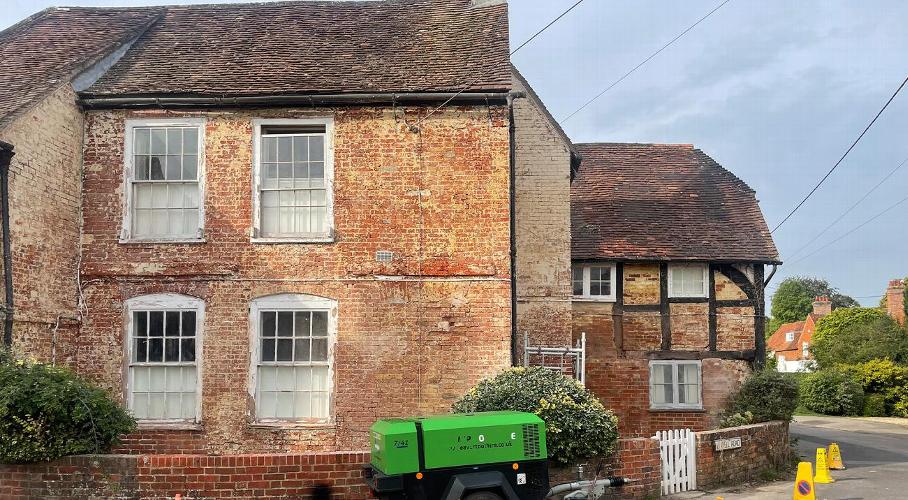
Exterior Paint Removal Explained: How Removing Masonry Paint Protects Brickwork, Prevents Damp and Improves Long-Term Building Health
Painting brickwork may seem like a simple cosmetic upgrade, but exterior masonry paint can interfere with how a building naturally manages moisture. Over time, painted brick and stone often experience trapped moisture, frost damage, surface failure and even hidden structural decay.
This guide explains:
- Why painting brickwork can cause damp and masonry damage
- How exterior paint affects breathability and moisture movement
- The warning signs of failing masonry paint
- Why repainting is often not the solution
- How professional exterior paint removal works
- The long-term structural benefits of removing paint
Why Painting Brickwork Can Cause Long-Term Damp and Structural Problems
Brick and natural stone are porous, breathable materials. They are designed to absorb small amounts of moisture during wet conditions and release it again as the weather dries. This natural cycle regulates moisture levels within the wall structure and protects the integrity of the building over time.
When exterior masonry paint is applied, that balance is disrupted. Instead of allowing moisture to evaporate naturally, the paint forms a surface barrier that alters how the wall manages water.
Brick and Stone Are Designed to Breathe Naturally
Traditional masonry absorbs rainwater in small quantities and then releases it back into the atmosphere through evaporation. This ongoing process prevents moisture from accumulating within the wall and helps maintain structural stability.
Masonry Paint Creates a Surface Film That Restricts Evaporation
Most exterior paints sit on top of the brickwork rather than soaking into it. This surface coating slows down the rate at which moisture can escape, especially once multiple layers have been applied over time.
“Breathable” Paints Still Limit Moisture Movement
Even paints marketed as breathable often reduce permeability compared to uncoated brick. As coatings age, crack, or become clogged with dirt and pollutants, their ability to allow vapour to pass through decreases further.
Hairline Cracks Allow Water In but Not Back Out
Painted surfaces frequently develop small cracks due to weather exposure and thermal movement. These cracks allow rainwater to enter behind the paint layer, but evaporation is restricted - trapping moisture within the masonry.
Ageing Paint Becomes Less Permeable Over Time
UV exposure, pollution, and repeated repainting gradually reduce the breathability of masonry paint systems. Each additional coat increases the barrier effect, compounding moisture retention issues.
Trapped Moisture Builds Internal Pressure Within Brickwork
When moisture cannot escape efficiently, it accumulates inside the wall. This leads to increased internal pressure, particularly during temperature fluctuations. Over time, this pressure contributes to:
- Damp penetration into internal walls
- Salt crystallisation within brick pores
- Surface blistering and paint failure
- Brick softening and mortar erosion
Once this cycle begins, deterioration can accelerate - often remaining hidden until visible damage appears on the surface.
By understanding how painted brickwork alters natural moisture movement, it becomes clear why long-term damp and structural problems frequently follow.
How Exterior Masonry Paint Affects Brick Breathability
Understanding how exterior masonry paint impacts brick breathability is key to preventing damp and long-term structural damage. Brickwork is not designed to be completely sealed - it relies on controlled moisture movement to remain stable and durable.
When that balance is disrupted, problems begin beneath the surface.
What Does “Breathable Brickwork” Mean in Traditional Masonry?
Traditional solid-wall construction depends on natural vapour permeability. Breathable brickwork allows moisture to pass through the wall gradually, preventing build-up.
In practical terms, breathable masonry means:
Rainwater can enter in small, manageable amounts
Brick and mortar are porous by nature, allowing minor absorption during wet weather.
Moisture evaporates back out as conditions dry
Sunlight, wind and airflow allow absorbed moisture to escape naturally.
Internal condensation can dissipate through the wall surface
Older properties especially rely on vapour diffusion to regulate humidity indoors.
This ongoing cycle keeps the wall balanced. Moisture does not accumulate because it always has a pathway to escape.
What Happens When Exterior Brickwork Is Painted?
When exterior masonry paint is applied, especially non-mineral or film-forming coatings, evaporation slows dramatically.
Instead of allowing vapour to pass freely:
Moisture becomes trapped within the brick structure
Water entering through cracks or porous areas cannot escape efficiently.
Salts crystallise beneath the paint layer
As moisture attempts to evaporate, mineral salts are left behind, creating internal stress.
The brick's fired outer surface begins to weaken
Prolonged saturation softens the protective outer layer of the brick.
Damp migrates inward toward internal walls
Moisture seeks alternative escape routes, often resulting in internal damp patches.
Over time, repeated wetting and restricted drying cycles destabilise the masonry.
Is Masonry Paint Bad for Brick and Stone?
Why Painted Brickwork Often Leads to Damp Problems
The UK's wet climate increases the risks associated with painted masonry.
When rain penetrates cracks or porous areas in paint:
- Water becomes sealed behind the coating
- Evaporation slows dramatically
- Moisture spreads laterally within the wall
Common Damp Issues Caused by Painted Brick
- Internal damp patches
- Efflorescence (white salt staining)
- Softening or powdering bricks
- Mould growth
- Peeling or bubbling paint
These are not cosmetic defects — they are signs of moisture imbalance within the wall structure.
What Is Frost Weathering and Freeze–Thaw Damage in Painted Brickwork?
One of the most damaging consequences of trapped moisture is freeze–thaw cycling.
How Freeze–Thaw Damage Happens
- Moisture enters the brick
- Paint prevents evaporation
- Temperatures drop below freezing
- Water expands by approximately 9%
- Internal pressure fractures the brick surface
Visible Signs of Frost Damage
- Spalling (surface flaking)
- Cracked brick faces
- Crumbling mortar joints
- Surface delamination
Painted brick is particularly vulnerable because moisture cannot escape before winter temperatures arrive.
Repeated freeze–thaw cycles significantly reduce the lifespan of masonry.
Early Warning Signs That Exterior Paint Is Damaging Brickwork
Exterior paint rarely fails without a reason. In many cases, visible paint deterioration is the first indication that moisture is building up within the masonry beneath the surface.
Paint does not simply peel because it is old - it often peels because pressure is forming behind it. Recognising these early warning signs can help prevent more serious structural damage.
Why Paint Failure Is Often a Symptom of Deeper Moisture Problems
When moisture becomes trapped behind exterior masonry paint, it creates internal vapour pressure. As this pressure increases, the paint film begins to lose adhesion.
Instead of bonding firmly to the brick surface, the coating starts to lift, crack or detach - revealing that the wall is struggling to dry properly.
Common Signs of Failing Masonry Paint on Brickwork
Blistering or Bubbling Paint
Raised bubbles form when moisture vapour pushes against the underside of the paint layer. This is a strong indication that water is trapped within the wall and attempting to escape.
Peeling and Flaking Coatings
When adhesion weakens due to prolonged dampness, sections of paint begin to detach from the brick surface. Repainting without addressing the moisture source often leads to rapid repeat failure.
Cracking Along Mortar Joints
Paint frequently splits where brick meets mortar because these areas expand and contract at different rates. Cracks allow rainwater in, but evaporation remains restricted — worsening moisture retention.
Dark or White Staining Beneath Paint
Discolouration beneath or bleeding through paint can signal salt migration (efflorescence). As moisture moves through masonry, it carries soluble salts to the surface, where they crystallise.
Powdery or Soft Brick Surface
When paint flakes away, the brick underneath may appear dusty, crumbly or weakened. This suggests the protective outer face of the brick has been compromised due to prolonged saturation.
Persistent Damp Smells or Internal Wall Marks
Exterior paint issues are often accompanied by indoor symptoms such as damp patches, peeling wallpaper or musty odours — signs that moisture is migrating inward.
What Happens to Brickwork Behind Painted Surfaces Over Time?
Damage behind paint can remain hidden for years.
Long-Term Effects of Trapped Moisture
- Brick softening
- Loss of the protective fired surface
- Mortar erosion
- Salt crystallisation damage
- Reduced structural strength
Because the paint masks early deterioration, problems are often only discovered once serious decay has occurred.
Paint Removal vs Repainting Brickwork: Which Is Better Long Term?
Repainting may temporarily improve appearance, but it rarely solves the underlying issue.
What Happens If You Paint Over Failing Masonry Paint?
- Moisture becomes sealed in further
- Breathability decreases with each layer
- New coatings fail faster
- Internal stress increases
Why Paint Removal Is Often the Healthier Solution
- Restores natural evaporation
- Allows brickwork to dry
- Reduces internal moisture pressure
- Slows long-term deterioration
Repainting addresses symptoms. Paint removal addresses causes.
To work out which your building needs, see our guide on whether old exterior paint can be painted over.
For the full breakdown of when to strip, when to repaint, and when it's not safe to paint over old paint, see our guide on paint removal vs repainting your exterior.
How Professional Exterior Paint Removal Works
Removing masonry paint requires specialist methods that protect brick and mortar.
Aggressive techniques such as sandblasting or high-pressure washing can:
- Scar brick surfaces
- Remove protective outer layers
- Damage mortar joints
- Increase future moisture absorption
Professional systems focus on controlled, low-impact removal.
What Is DOFF Cleaning and Why Is It Used for Exterior Paint Removal?
DOFF cleaning is a low-pressure steam system widely used for safe paint removal.
How DOFF Works
- Superheated water (up to 150°C)
- Delivered at low pressure
- Softens paint layers
- Lifts coatings without abrasion
Benefits of DOFF Paint Removal
- Preserves brick faces
- Protects mortar joints
- Avoids harsh chemicals
- Suitable for heritage buildings
- Removes biological growth alongside paint
This method is particularly effective for brick, stone and traditional render.
Why Low-Pressure Steam Paint Removal Is Safer for Heritage Brickwork
Historic and listed buildings depend on original materials remaining intact.
Low-pressure steam systems:
- Maintain surface texture
- Protect softer, older bricks
- Support conservation standards
- Prevent irreversible surface damage
For heritage properties, paint removal is often recommended to restore breathability and preserve structural integrity.
Can Removing Exterior Paint Improve a Building's Long-Term Health?
Yes - restoring breathability has measurable structural benefits.
Long-Term Benefits of Exterior Paint Removal
- Stabilised moisture levels
- Reduced freeze–thaw risk
- Lower damp incidence
- Improved thermal performance
- Extended brick lifespan
- Reduced repair costs
Once masonry can dry naturally, it performs as originally intended.
Is Masonry Paint Always Bad for Brick and Stone?
In many modern cavity-wall buildings, specialist breathable systems may perform adequately. However, for:
- Older solid-wall buildings
- Soft red brick properties
- Heritage or listed structures
- Lime mortar construction
Paint often accelerates deterioration.
Each building requires assessment, but traditional masonry typically benefits from being left uncoated or finished with breathable mineral systems instead of standard masonry paint.
Can You Remove Exterior Paint Yourself Without Damaging Brick?
DIY paint removal carries significant risk.
Improper methods can:
- Scar or pit brick surfaces
- Weaken mortar joints
- Force water deeper into walls
- Cause uneven results
Professional assessment ensures the correct removal technique is selected for the building type and paint system used.
Exterior Paint Removal: A Proactive Step Towards Long-Term Building Preservation
While painting brickwork may offer short-term visual improvement, it often compromises a building's ability to manage moisture effectively. Trapped damp, freeze–thaw damage, surface failure and hidden structural decay are common consequences - particularly in the UK's climate.
Professional exterior paint removal restores natural breathability, reduces moisture retention and protects the long-term structural health of brick and stone buildings. Low-pressure steam systems such as DOFF allow safe removal without damaging original materials, making them ideal for both modern and heritage properties.
Removing paint is not just an aesthetic decision - it is a preventative maintenance strategy that:
- Protects masonry
- Prevents damp
- Reduces future repair costs
- Extends building lifespan
- Preserves structural integrity
When moisture can move freely again, the building performs as it was designed to - naturally, efficiently and sustainably.
Protect Your Brickwork with Professional Exterior Paint Removal
If your painted brickwork is showing signs of damp, blistering, flaking or frost damage, now is the time to act. Trapped moisture and failing masonry paint can lead to costly long-term repairs if left untreated.
Ultra Cleaning Services provides specialist exterior paint removal using safe, low-pressure steam systems designed to protect brick, stone and mortar. Whether you own a period property, listed building or modern home, our expert team can assess the condition of your masonry and recommend the most suitable removal method.
Restore your building's breathability. Prevent further damage. Protect your property's long-term health.