
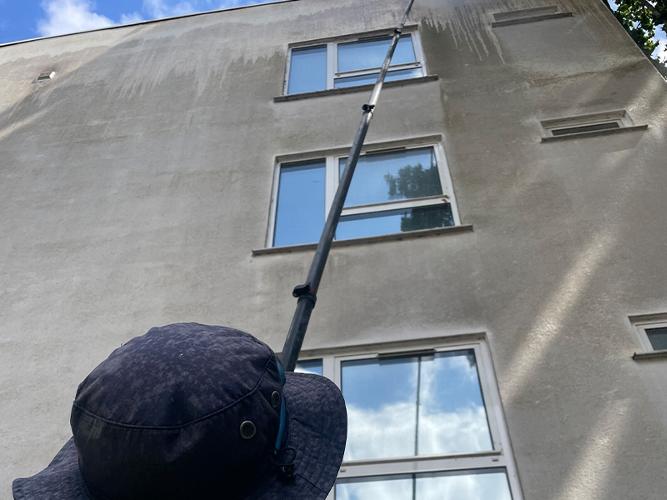
Rendered walls should typically be cleaned every 12 to 24 months, though the exact frequency depends on your local climate, the render's exposure to weather, and the colour and finish of the render itself. Getting the timing right matters - leave it too long and algae, moss, and grime can eat into the surface, costing you far more in repairs than a routine clean would have.
In this guide, we'll break down exactly how often should rendered walls be cleaned, what affects that timeline, how professional render cleaning works, and how to keep your walls looking sharp for longer.
Quick answer: Clean rendered walls every 12–24 months, or annually if your property is shaded, damp, coastal, or near a busy road. Watch for green/black staining and chalky discolouration as early warning signs.
Why Does Render Get Dirty and Need Cleaning?
Why Does Render Need Cleaning?
Render needs cleaning because its slightly porous, textured surface is the perfect environment for dirt, spores, and pollutants to take hold. Unlike smooth brick or painted masonry, render has a rougher microstructure that traps moisture and airborne particles rather than letting them wash away naturally in the rain.
Over time, this trapped moisture feeds biological growth such as algae, lichen, and black mould spores. Left unchecked, these organisms don't just sit on the surface - they can penetrate the render's outer layer, causing discolouration that a simple rinse won't remove and, eventually, cracking or degradation of the material itself. This is one of the main reasons render cleaning isn't just cosmetic maintenance; it's a protective measure for your property's exterior.
Why Render Gets Dirty
Render gets dirty primarily due to a combination of moisture, airborne pollution, biological growth, and its own porous texture. Each of these factors compounds the others, which is why dirty render tends to get dirty faster once the process has started.
Moisture retention is the biggest culprit. North-facing and shaded walls that don't get much direct sun stay damp for longer after rain, giving algae and moss the perfect conditions to establish themselves. Airborne pollution - including traffic fumes, dust, and industrial particulates - settles into the render's textured surface and binds with moisture to create a grimy film. Biological growth, particularly green algae and black lichen, thrives in damp, low-light conditions and spreads quickly once a colony takes hold. Finally, the render's own texture - whether it's a smooth, textured, or pebble-dash finish - determines how easily dirt can lodge into the surface versus simply washing off.
Signs Your Render Needs Cleaning
Your render needs cleaning when you notice green or black staining, a dull or chalky appearance, streaking beneath window sills and gutters, or a generally patchy, uneven colour across the wall. These visual cues are your clearest indicator that it's time to book a clean before the problem worsens.
Green staining usually indicates algae growth, while black or dark grey patches point to mould or lichen - both thrive in damp, shaded areas. A chalky, faded look often means UV damage combined with a build-up of fine dust and pollutants. Streaking below gutters or window ledges is a sign that rainwater is carrying dirt and organic material down the wall face, depositing it unevenly. If you spot any of these signs, it's worth acting quickly, because biological growth spreads exponentially - a small patch today can cover half the wall within a season.
How Often Should Rendered Walls Be Cleaned?
As a general rule, how often should rendered walls be cleaned comes down to a 12-to-24-month window, with most properties benefiting from an annual clean to stay ahead of algae and grime build-up. Properties in damper, shadier, or more polluted locations often need cleaning closer to the 12-month mark, while those in drier, sunnier, more sheltered spots can sometimes stretch to two years between cleans.
There isn't a single fixed answer, because how often should rendered walls be cleaned genuinely varies from property to property. A coastal home exposed to salt spray, a house near a busy road, or a wall that sits permanently in shade will all need attention more frequently than a south-facing wall in a rural, open setting. The safest approach is to inspect your render every few months and book a professional clean as soon as you notice the early signs of staining, rather than waiting for a fixed calendar date.
Factors That Affect How Frequently You Need to Clean Rendered Walls
The main factors that affect how frequently you need to clean rendered walls are orientation, local climate, surrounding vegetation, render colour, and nearby pollution sources. Understanding these will help you predict your own cleaning schedule rather than relying on generic advice.
- Wall orientation - North and east-facing walls in the UK receive less direct sunlight, stay damp for longer, and are far more prone to algae and moss than south-facing walls.
- Local climate and rainfall - Properties in wetter regions, or areas with high humidity, will see biological growth establish faster than those in drier climates.
- Nearby trees and vegetation - Overhanging branches drop debris, block sunlight, and increase humidity around the wall, accelerating dirt build-up.
- Render colour - Lighter renders show dirt and staining much more visibly than darker finishes, so they often need cleaning more frequently to maintain their appearance, even if the actual level of grime is similar.
- Proximity to roads or industry - Traffic fumes and airborne particulates settle into render and bind with moisture, creating a stubborn grey film that builds up faster in urban areas.
- Guttering condition - Blocked or leaking gutters cause water to run down the wall face, creating damp streaks and accelerating localised dirt build-up.
If two or more of these factors apply to your property, it's worth erring toward the shorter end of the cleaning window.
Best Time of Year to Clean Render
The best time of year to clean render is during spring or early autumn, when temperatures are mild and the walls have a chance to dry out fully afterwards. These seasons strike the right balance between avoiding frost and avoiding the peak heat and direct sun of midsummer.
Cleaning in spring removes the algae and moss that built up over the damp winter months, giving your render a fresh start before summer. Early autumn cleaning, meanwhile, clears away summer grime and prepares the walls to better resist the wetter winter ahead. It's best to avoid cleaning render in freezing conditions, since water can seep into small cracks and expand as it freezes, potentially causing damage. Similarly, cleaning during a heatwave isn't ideal, as cleaning solutions can dry too quickly on the surface, reducing their effectiveness and sometimes leaving streaks.
How Is Render Cleaned? Process, Time and Cost
How Do You Clean Rendered Walls?
You clean rendered walls using a combination of a specialist biocide treatment to kill algae, moss, and mould spores, followed by a low-pressure or soft-wash rinse to remove the dead growth and surface dirt. This method protects the render's texture while still delivering a thorough, deep clean.
Professional render cleaning generally follows these steps:
- Inspection - The wall is checked for cracks, damage, or areas of heavy biological growth before any cleaning begins.
- Biocide application - A specialist treatment is applied to kill algae, lichen, and mould at the root, rather than just removing the visible staining.
- Dwell time - The biocide is left to work for a set period, allowing it to penetrate the organic growth fully.
- Soft washing or low-pressure rinsing - Rather than high-pressure jet washing, which can damage the render's surface and force water behind the finish, a gentle low-pressure rinse is used to wash away the dead growth and loosened dirt.
- Final inspection and drying - The wall is checked over once clean and left to dry naturally.
It's important to note that high-pressure washing is generally not recommended for render, since it can strip the surface texture, force moisture into the substrate, and even cause cracking. This is why professional render cleaning services rely on soft-washing techniques rather than domestic pressure washers.
How Long Does It Take to Clean Render?
Cleaning render typically takes between two and six hours for an average-sized house, depending on the size of the property, the extent of the staining, and the number of walls being treated. Larger properties, or those with heavy algae and lichen build-up, will naturally take longer.
A small single-storey extension might only take an hour or two, while a full detached house with render on all elevations could take the better part of a day, including biocide dwell time. Weather conditions on the day also play a role - light rain can extend the process, while a dry, mild day allows the job to proceed efficiently from start to finish.
How Long Does Render Cleaning Last?
Render cleaning typically lasts between 12 and 24 months before noticeable regrowth or staining returns, though this can vary significantly based on the property's location and exposure. A well-executed biocide treatment doesn't just clean the surface - it also helps slow down how quickly new algae and moss can establish themselves.
Properties in sheltered, sunny, well-ventilated locations often stay clean toward the longer end of that range, while shaded, damp, or heavily vegetated properties may see growth return sooner. Some professional render cleaning treatments include a longer-lasting biocide specifically designed to inhibit regrowth for an extended period, which can be a worthwhile upgrade if your property is particularly prone to algae.
How Much Does It Cost to Get Render Cleaned?
The cost to get render cleaned generally ranges from around £300 to £800 for an average-sized semi-detached or detached house, though prices vary based on property size, accessibility, and the severity of the dirt or biological growth. Smaller properties or single walls will sit at the lower end, while larger homes with extensive render coverage or difficult access will cost more.
Several factors influence the final price: the square footage of render being cleaned, how much scaffolding or access equipment is required, the level of biological growth present, and whether any additional treatments - such as a longer-lasting biocide or minor render repairs - are needed. It's always worth getting a proper on-site or photo-based quote rather than relying on a generic estimate, since every property's render condition is different.
How to Prevent Your Render From Getting Dirty
You can prevent your render from getting dirty by improving drainage around the property, trimming back nearby vegetation, keeping gutters clear, and considering a protective coating after cleaning. These simple, ongoing steps significantly extend the time between professional cleans.
- Keep gutters and downpipes clear so rainwater doesn't overflow and streak down the render.
- Trim back trees and shrubs near the walls to reduce shade, improve airflow, and cut down on debris landing on the surface.
- Improve ground-level drainage so water doesn't splash back onto the lower sections of render during heavy rain.
- Apply a protective, breathable coating after cleaning - many render cleaning services offer this as an add-on, and it helps repel moisture and slow future algae growth.
- Inspect your walls seasonally, especially after winter, so you can catch early signs of staining before they spread.
Taken together, these steps won't eliminate the need for cleaning altogether, but they can meaningfully stretch out the interval and keep your render looking better for longer between professional treatments.
Frequently Asked Questions About Render Cleaning
Can I Clean Rendered Walls Myself?
You can clean rendered walls yourself for light surface dirt, but heavier algae, moss, or lichen growth is best left to professionals. DIY jet washing is one of the most common causes of render damage, since domestic pressure washers can strip the surface texture and drive water behind the render, leading to cracking or damp issues further down the line. A soft brush and a proprietary render-safe cleaner can manage light grime, but biological growth needs a proper biocide treatment to be removed at the root rather than just knocked back temporarily.
Does Render Cleaning Remove Algae Permanently?
Render cleaning does not remove algae permanently, but a proper biocide-based clean kills existing growth at the root and slows down how quickly it returns. Because render is a porous, outdoor surface constantly exposed to moisture and airborne spores, some regrowth over time is unavoidable - which is exactly why a 12-to-24-month cleaning cycle, rather than a one-off treatment, is the standard recommendation.
Is Render Cleaning Safe for All Types of Render?
Render cleaning is generally safe for all common render types - including sand and cement, monocouche, silicone, and acrylic renders - provided the correct method and pressure are used. Softer or older renders typically require gentler, lower-pressure techniques, which is why it's worth using an experienced render cleaning service rather than a generic pressure-washing provider who may not adjust their approach to your specific render type.
Final Thoughts on Render Cleaning Frequency
So, how often should rendered walls be cleaned? For most UK properties, an annual clean strikes the right balance between keeping render looking fresh and protecting it from long-term damage - though shaded, damp, or heavily vegetated properties may need attention more often. Paying attention to the signs your render needs cleaning, rather than sticking to a rigid schedule, is the most reliable way to keep your property looking its best all year round.
Ready to Restore Your Render?
Don't wait for staining, algae, or moss to take hold. At Ultra Cleaning Services, our specialist render cleaning treatments use safe, low-pressure soft-washing techniques to remove dirt, kill biological growth at the root, and protect your walls for the long term - without damaging the render's finish.
Get in touch with Ultra Cleaning Services today for a free, no-obligation quote and give your rendered walls the professional clean they deserve.
Render Cleaning Service Contact Us