
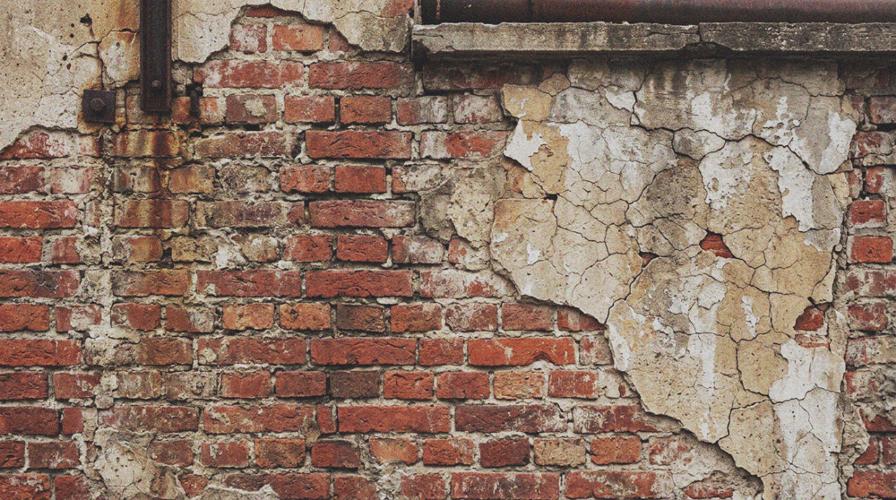
Early Warning Signs That Exterior Paint Is Damaging Brickwork
Painting an exterior brick wall can transform the appearance of a property, but the wrong coating, or a coating that has begun to fail, can prevent moisture from escaping naturally. Recognising the signs exterior paint is damaging brickwork early can help you address the cause before bricks, mortar joints and internal walls require more extensive repairs.
This is particularly important for older and period properties across Winchester, Hampshire and the South of England. Traditional brickwork was designed to manage moisture differently from many modern wall systems, and an unsuitable non-breathable coating can interfere with that process. Even newer brickwork can suffer when water finds a route behind the paint but cannot evaporate back through the surface.
The warning signs are not always dramatic at first. Small bubbles, pale deposits or isolated damp patches may appear cosmetic, yet they can indicate that moisture is moving through the wall. This guide explains what to look for, why these changes occur and when to arrange a professional assessment of painted brickwork.
Understanding the signs exterior paint is damaging brickwork makes it easier to distinguish a routine decorating issue from a problem that may require specialist attention.
What Are the Early Warning Signs of Paint Damage on Brickwork?
The earliest warning signs of paint damage on brickwork include bubbling or peeling paint, persistent damp patches, white deposits, crumbling mortar and deterioration of the brick face. These symptoms often develop when moisture becomes trapped behind a coating, although defects such as leaking gutters, failed pointing and damaged flashing may also be contributing factors.
Taken together, these changes are among the clearest signs exterior paint is damaging brickwork, rather than paint simply reaching the end of its decorative lifespan.
1. Bubbling, blistering or lifting paint
Bubbles form when moisture or vapour creates pressure behind the painted surface. At first, they may be limited to a small area near the base of a wall, around a window or beneath a gutter. Over time, the affected paint can split and lift away.
Look closely for:
- Small raised blisters beneath an otherwise intact surface
- Larger bubbles that feel hollow or soft when inspected safely
- Paint lifting around cracks, joints, windows or door openings
- Repeated bubbling after an area has previously been repainted
Painting over a blister may temporarily hide it, but it will not resolve the moisture source or restore the wall's ability to release moisture.
2. Peeling, cracking or flaking paint
Peeling paint is one of the most visible signs exterior paint is damaging brickwork, especially when flakes bring away grains or fragments from the masonry beneath. Ordinary ageing and poor surface preparation can also cause paint failure, so the condition of the exposed brick and mortar is important.
Check the surface beneath the paint
Where paint has already detached, check whether the brick face appears firm or powdery. A fragile, pitted or crumbling surface may suggest that deterioration is occurring beneath the coating rather than within the paint layer alone.
3. Dark or slow-drying patches
Brickwork that remains dark long after surrounding areas have dried may be retaining moisture. The patches may become more noticeable following rain and can recur in the same locations.
Common areas include:
- Beneath leaking or overflowing gutters
- Around downpipes and external pipework
- Below window sills
- Near ground level or raised flower beds
- Around cracks and defective mortar joints
- On sheltered elevations that receive little sun or airflow
4. Crumbling mortar joints
Mortar should protect the edges of the bricks while allowing the wall to manage moisture. If joints become sandy, recessed, cracked or loose beneath paint, water can enter more easily and deterioration may accelerate.
Unsuitable hard repairs can compound the issue. For example, older soft bricks and traditional lime mortar may not respond well when covered by rigid, impermeable materials. A specialist should assess the whole wall rather than treating the painted surface in isolation.
5. Spalling or loss of the brick face
Spalling occurs when the outer face of a brick flakes, breaks or falls away. Moisture can contribute to this deterioration, particularly when it freezes and expands within the masonry during cold weather.
Warning signs include:
- Thin pieces breaking away from the face of a brick
- Pitted or uneven surfaces revealed beneath loose paint
- Rounded or crumbling brick edges
- Brick fragments collecting at the foot of the wall
- Localised damage that returns after cosmetic repairs
Spalling should not be ignored. Once the protective face has been lost, the softer material inside the brick can become more vulnerable to further weathering.
What Are the Signs of Moisture Trapped Behind Masonry Paint?
Moisture trapped behind masonry paint commonly causes blistering, peeling, salt deposits, dark patches and deterioration of the brick or mortar beneath. It may also contribute to musty smells or damp marks internally, although these symptoms can have several possible causes and require proper investigation.
Because moisture can travel within a wall, the signs exterior paint is damaging brickwork may not appear directly beside the original point of water entry.
Changes visible outside
Exterior symptoms may include:
- Bubbles that appear after periods of wet weather
- Paint peeling from the wall in sheets or repeated patches
- Green algae or organic growth on persistently damp areas
- White crystalline marks pushing through the coating
- Cracks in the paint that mirror failing mortar joints
- Soft, powdery or damaged masonry beneath loose paint
Changes visible inside
On the inside of the corresponding external wall, you may notice:
- Discoloured plaster or paint
- A cold, persistently damp-feeling surface
- Peeling wallpaper or internal paint
- Mould growth or a musty odour
- Damage near skirting boards, chimney breasts or window reveals
These do not prove that exterior paint is the sole cause. Roof defects, plumbing leaks, defective gutters, bridging and poor ventilation can create similar symptoms. A responsible inspection should consider possible water-entry points as well as the type and condition of the masonry coating.
Why Are White Deposits Appearing on Painted Brickwork?
White deposits on painted brickwork are often efflorescence: soluble salts carried towards the surface by moisture and left behind as the water evaporates. Their appearance suggests that water is moving through the masonry, even if the deposit itself is not necessarily a serious structural defect.
What efflorescence looks like
It may appear as:
- A fine white powder
- Pale streaks beneath cracks or joints
- Crystalline patches around damaged paint
- A recurring white bloom after cleaning
Simply brushing away the deposit deals with its appearance, not the underlying movement of moisture. If it returns, the wall should be checked for failed gutters, open joints, cracks, poor drainage and coatings that restrict evaporation.
Efflorescence versus mould
Efflorescence is usually pale, dry and mineral-like, while mould or algae may appear green, black or brown and is more likely to grow in persistently damp conditions. If you are unsure what is present, avoid aggressive cleaning until the surface has been assessed.
Does Painting Brick Cause Damp?
Painting brick does not automatically cause damp, but an unsuitable non-breathable coating can trap or redirect moisture and make an existing water problem more difficult for the wall to manage. Problems are more likely when paint is applied to damp or poorly prepared masonry, when defects allow rainwater behind the coating, or when multiple impermeable layers have accumulated.
Brick is porous, which means it naturally absorbs and releases a degree of moisture. A suitable breathable masonry coating may allow water vapour to pass through, whereas a less permeable film can slow evaporation. Water may still enter through cracks, failed pointing, rooflines and openings, leaving it with a restricted route out.
Factors that increase the risk
- Older, softer or handmade bricks
- Traditional solid-wall construction
- Existing cracks or defective pointing
- Leaking gutters and downpipes
- Poorly sealed windows, copings or parapets
- Paint applied before the wall was fully dry
- Several thick layers of unknown coating
- Hard cement repairs used alongside softer historic materials
- Exposed elevations subject to driving rain
For homes in Winchester and across Hampshire, seasonal rainfall and winter freeze-thaw cycles can expose weaknesses in a painted wall. The presence of paint does not remove the need to maintain gutters, joints, sills and roof details.
How to Tell When Your Brickwork Needs Attention
Your brickwork needs attention when surface changes persist, spread, recur after repainting or are accompanied by damaged mortar, crumbling bricks or internal damp. A single isolated paint chip may be minor, but a pattern of connected symptoms deserves closer investigation.
Monitoring the signs exterior paint is damaging brickwork over several weeks, including how they change after rain, can provide useful evidence for a professional assessment.
A simple visual check for property owners
Inspect the wall safely from ground level and record what you can see. Photographs taken after dry weather and again following heavy rain can reveal changes that are otherwise difficult to track.
- Check the paint finish
- Is it bubbling, cracking or separating from the wall?
- Are the same areas failing repeatedly?
- Does the exposed masonry look powdery or damaged?
- Check the bricks and mortar
- Are brick faces flaking or breaking away?
- Are mortar joints cracked, recessed or loose?
- Are white salts or dark damp patches present?
- Check nearby building details
- Are gutters overflowing or downpipes leaking?
- Are window sills, coping stones or flashing defective?
- Is soil, paving or a raised bed bridging the base of the wall?
- Check the corresponding interior
- Are there damp marks, peeling finishes or musty smells?
- Does the problem become more noticeable after rain?
- Has previous internal redecorating failed in the same place?
Do not climb, scrape large sections or disturb an unknown older coating simply to investigate it. A specialist can conduct a controlled assessment without unnecessarily exposing or damaging the masonry.
How Long Does Painted Brickwork Take to Show Signs of Damage?
Painted brickwork can show problems within months if the surface was damp, poorly prepared or exposed to an active leak, but concealed deterioration may take several years to become obvious. The timeline depends on the brick type, wall construction, coating, number of layers, exposure and source of moisture.
Why damage can remain hidden
An apparently uniform painted finish can mask fine cracks, eroded pointing and early spalling. The first visible symptom may be a small bubble, but a larger area beneath it may already be damp. Equally, peeling paint is not always evidence of severe brick damage; sometimes adhesion has failed while the masonry remains sound.
The important question is not simply how old the paint is, but whether the wall is drying properly and whether its condition is changing. Regular visual checks are particularly worthwhile after:
- Prolonged or wind-driven rain
- Freezing temperatures
- Gutter or roofing failures
- Building alterations
- Repointing or external repairs
- Previous repainting over a recurring defect
What Happens If You Ignore Brick Damage Warning Signs?
Ignoring warning signs can allow moisture entry, paint failure and masonry deterioration to progress, increasing the scope and cost of eventual restoration. Minor defects may develop into widespread peeling, eroded mortar, damaged brick faces or internal damp finishes.
Potential consequences include:
- More extensive spalling: Repeated wetting and cold weather can worsen the loss of brick faces.
- Deteriorating pointing: Weakened joints may admit more water and reduce weather resistance.
- Recurring damp symptoms: Internal decorating may continue to stain, blister or peel if the external cause remains.
- Hidden repair requirements: Layers of paint can conceal earlier filling, mismatched repairs and damaged masonry.
- Higher restoration costs: A small assessment and targeted intervention can become a larger removal, repointing and brick-repair project.
- Loss of architectural character: Decorative details and the natural variation of historic brickwork may become harder to recover after repeated coatings or abrasive treatment.
Acting early does not always mean removing every trace of paint immediately. It means identifying the coating, investigating water sources and choosing a proportionate plan based on the condition of the building.
Is It Worth Removing Paint From Brick?
Removing paint from brick can be worthwhile when a failing or unsuitable coating is trapping moisture, concealing deterioration or creating an ongoing maintenance cycle. It may also restore much of the building's original character, but the likely result should be assessed before full removal begins.
Potential benefits of professional paint removal
- Reveals the condition of the brickwork and pointing
- Allows suitable repairs to be identified and completed
- Helps porous masonry release moisture more naturally
- Removes peeling, blistered and uneven coatings
- Reduces the need to keep repainting a failing surface
- Restores the texture, colour and character of exposed brick
Questions to consider first
Not every painted wall will look pristine when stripped. Paint may be hiding patch repairs, staining, replaced bricks or earlier damage. Before deciding, ask:
- What type of brick and mortar is present?
- Is the property modern, historic or listed?
- How many layers of paint appear to have been applied?
- Is the brick face already weak or spalling?
- Are there active leaks or pointing defects to repair?
A professional assessment provides far more useful information than assumptions based on the visible coating. It helps establish the likely paint type, the condition of the masonry and the finish that may realistically be achieved.
Can Painted Brickwork Be Restored Without Damaging It?
Painted brickwork can often be restored without unnecessary damage when the coating and substrate are tested first and a controlled, non-abrasive method is selected. No responsible specialist should promise an identical outcome for every wall, because brick hardness, paint penetration and previous repairs vary considerably.
Why a professional assessment matters
A detailed assessment allows the specialist and property owner to consider:
- How the paint responds to treatment
- Whether several coating layers are present
- The colour and condition of the brick beneath
- Whether pointing or filling has been concealed
- The likely pace and finish of the wider project
Ultra Cleaning Services begins with a detailed assessment of the property, coating and underlying surface. This helps the team choose an appropriate approach for the individual building rather than applying a standard process to every surface.
What Is the Safest Way to Remove Masonry Paint?
The safest way to remove masonry paint is to use a professionally controlled method chosen after testing the coating, brick and mortar. Low-pressure superheated steam, specialist paint-softening systems or a carefully managed combination may be appropriate, while aggressive blasting or uncontrolled high pressure can scar brick faces and erode joints.
DOFF superheated steam cleaning
Ultra Cleaning Services uses state-of-the-art DOFF equipment where suitable. The system uses superheated steam at low pressure to soften and lift coatings while limiting the force placed on delicate masonry and pointing.
This controlled approach can be particularly valuable for:
- Older or sensitive brickwork
- Detailed architectural features
- Historic masonry and stonework
- Areas where harsh mechanical abrasion would present a risk
- Projects requiring careful, staged removal
Why DIY removal can be risky
Paint removal from brick is not the same as washing a hard patio surface. Common risks include:
- Driving water deeper into the wall
- Eroding soft mortar joints
- Removing the protective face of the brick
- Leaving patchy paint trapped in textured surfaces
- Spreading chemical residues or contaminated runoff
- Damaging windows, seals, timber and surrounding finishes
- Disturbing an older coating without knowing its composition
The aim is not merely to strip paint quickly. It is to remove the coating while protecting the underlying building fabric and managing the site responsibly.
When Should Painted Brickwork Be Inspected by a Specialist?
Painted brickwork should be inspected by a specialist when paint failure is widespread or recurring, brick faces are crumbling, mortar is deteriorating, damp appears internally or the building is historic or otherwise sensitive. Early advice is also sensible before repainting, because another coat may conceal the symptom without correcting its cause.
Arrange an assessment if you notice:
- Widespread bubbling, peeling or flaking
- White deposits that repeatedly return
- Spalling, powdering or visibly soft bricks
- Cracked or missing mortar joints
- Damp patches that remain after dry weather
- Internal marks corresponding with an external painted wall
- Damage concentrated beneath gutters, rooflines or window sills
- Several thick or unidentified paint layers
- Previous repair or repainting work that has failed again
Extra care for period and historic properties
Older buildings often contain softer bricks, lime mortar and solid-wall construction. These materials require an approach that respects how the original wall manages moisture. Listed buildings and properties in conservation areas may also be subject to additional requirements, so owners should check whether consent or specialist guidance is needed before changing an external finish.
Arrange a Professional Brick Paint Removal Assessment in Hampshire
A professional assessment can establish whether the signs exterior paint is damaging brickwork point to a failing coating, an external water defect or a combination of issues. It also gives you a clearer idea of what can be restored before you commit to full paint removal.
Ultra Cleaning Services provides specialist brick and masonry paint removal in Winchester, throughout Hampshire and across the South of England. Every building is treated individually, beginning with an inspection to determine the likely paint type, condition beneath and safest suitable removal method.
If you have noticed bubbling paint, white deposits, damaged mortar or crumbling brick faces, do not simply cover them with another coat. Contact Ultra Cleaning Services to request a free, no-obligation quotation and receive practical advice on restoring your exterior brickwork.
Request a free quote for exterior paint removal from Ultra Cleaning Services today.
Our Paint Removal Service Contact Us Now