
What Is the Difference Between Soft Washing and Pressure Washing?
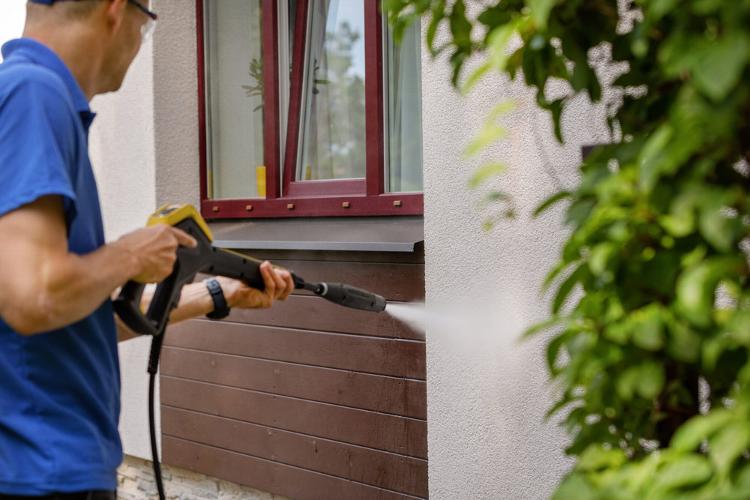
The main difference between soft washing and pressure washing is how each method achieves the clean: soft washing treats the cause of organic staining at low pressure, whereas pressure washing uses stronger mechanical force to remove material from the surface.
|
Factor |
Soft washing |
Pressure washing |
|
Main cleaning action |
A suitable treatment breaks down biological contamination before a low-pressure rinse |
Pressurised water physically loosens and carries away surface deposits |
|
Water pressure |
Low and carefully controlled |
Higher, with the exact level determined by the machine, nozzle and distance |
|
Often used for |
Render, roofs, painted surfaces, cladding and other sensitive finishes |
Sound concrete, robust paving, some car parks and other durable surfaces |
|
Particularly effective against |
Algae, mould, mildew, lichen and other organic growth |
Loose dirt, mud and some deposits on hard-wearing materials |
|
Main risk if used incorrectly |
An unsuitable product or concentration can affect the surface, plants or surrounding materials |
Excessive force can etch, strip, dislodge or drive water into the surface |
|
Professional priority |
Correct treatment, dilution, dwell time, protection and rinsing |
Correct pressure, flow, nozzle, distance, access and water control |
Soft washing cleans through treatment rather than force
A soft-wash process allows an appropriate cleaning solution time to work on algae, mould and similar biological growth. The surface can then be rinsed using much less pressure than would be needed to blast the visible staining away.
This makes soft washing particularly useful when high pressure could mark the finish or force water into weak areas. However, “low pressure” does not automatically make every treatment suitable for every material. The product, strength, application method and surrounding environment still need to be assessed.
Pressure washing cleans through water force
Pressure washing projects water at a controlled but substantially greater force. On a suitably robust surface, it can lift mud, dirt and loose deposits efficiently. On a weaker, porous, coated or weathered surface, that same action may remove more than the contamination.
The result depends on more than a machine's maximum pressure. Water flow, temperature, nozzle pattern, working distance, operator movement and the condition of the surface all affect how aggressive the clean will be.
How Does Soft Washing Work on Exterior Walls and Roofs?
Soft washing works by applying a surface-compatible treatment that breaks down organic growth, allowing contamination to be removed or weather away without relying on aggressive water pressure.
A professional soft-wash process begins with an inspection
Before applying any treatment, the contractor should identify both the surface and the substance growing on it. Green algae on modern render, black fungal staining on a painted wall and lichen on a roof tile do not necessarily require the same process.
An assessment may consider:
- The type, age and condition of the render, coating, tile or cladding
- Cracks, open joints, loose finishes and previous repairs
- Whether the staining is algae, moss, mould, lichen, pollution or something else
- Nearby windows, metals, timber, planting, ponds and drainage
- Safe access and how run-off will be contained or managed
- Whether a discreet test area is needed before the full clean
- Treatment strength and dwell time must be controlled
The treatment needs sufficient contact time to act on the contamination, but it should not be allowed to affect incompatible surfaces or dry where the process requires it to remain wet. A trained contractor controls the concentration, coverage and dwell time according to the material and conditions on the day.
Results may continue to improve after treatment
Some soft-washed surfaces look significantly cleaner as soon as they are rinsed, while deeply rooted growth or lichen may continue to fade after treatment. This is not a reason to apply unnecessary pressure: the safest result may develop more gradually than a forceful instant clean.
How Does Pressure Washing Work on Patios, Driveways and Hard Surfaces?
Pressure washing works by using the impact and movement of pressurised water to loosen dirt and deposits from a sufficiently hard, stable surface.
Pressure must be matched to the material
Professional pressure washing is not simply a matter of using the highest setting. A contractor can adjust the pressure, water flow, nozzle, distance and cleaning pattern to suit the surface and the deposit being removed.
Pressure washing may be considered for:
- Sound concrete areas
- Some block-paved driveways
- Robust paving slabs
- Certain commercial yards and car parks
- Other durable surfaces confirmed as suitable after inspection
Even within these categories, condition matters. Cracked concrete, weak pointing, loose jointing sand, damaged sealants and delicate stone can change the appropriate method.
Water control is as important as visible cleaning power
A professional must consider where dirty water will travel and what it may carry with it. Splashing onto walls, forcing water towards air bricks or doors, spreading oil residues and allowing contaminated run-off into the wrong drain can create new problems while solving the original one.
An even technique helps prevent stripes and surface marks
Holding a pressure-washing nozzle too close, pausing in one place or cleaning at an inconsistent distance can leave lines and patches. Suitable equipment and steady coverage help produce an even finish without repeatedly attacking difficult areas.
When Is Soft Washing Used Instead of Pressure Washing?
Soft washing is normally used instead of pressure washing when the contamination is biological and the surface could be damaged, penetrated or visibly altered by strong water pressure.
Soft washing is commonly chosen for sensitive surfaces
Subject to inspection and manufacturer guidance, suitable applications can include:
- Modern rendered façades
- Painted exterior walls
- Roof tiles and some roof finishes
- UPVC and certain types of cladding
- Fascias, soffits and other finished components
- Areas where water ingress is a particular concern
It is particularly useful for algae, mould and similar growth
Organic growth needs more than cosmetic removal. Blasting away the visible green or black layer may leave contamination within textured or porous areas, enabling it to return. A correctly specified soft-wash treatment targets the biological material rather than relying only on impact.
Low pressure reduces mechanical stress but does not remove the need for care
Soft washing is a controlled professional process, not permission to spray any chemical onto a building. Products must be compatible with the substrate, and nearby materials, people, animals, plants and watercourses must be protected.
Why Shouldn't You Pressure Wash Rendered Walls?
You generally should not pressure wash render because excessive or poorly controlled pressure can etch the finish, expose aggregate, worsen cracks and drive water into defects or the wall construction.
Render is not one single material
“Render” can refer to several finishes, including traditional lime render, sand and cement render, monocouche systems, silicone finishes and acrylic coatings. Their hardness, texture, age and condition vary considerably, so a setting that appears harmless on one elevation may mark another.
High pressure can leave permanent lines or patches
A concentrated jet may cut into a softer finish or clean one strip more aggressively than the surrounding wall. Once the texture has been altered, the marks may remain visible after the wall dries and may require repair or recoating rather than further cleaning.
Water can be forced into existing weaknesses
Pressure washing does not usually create every defect it reveals, but it can exploit small cracks, failed seals, damaged beads and weak junctions. Water driven behind the finish may contribute to damp patches, coating failure or frost-related deterioration.
It may remove colour or protective finishes unevenly
Coloured-through render and painted render can both weather over time. Aggressive cleaning may expose fresh material in isolated areas or remove a coating inconsistently, making the elevation look patchy.
Soft washing is often safer for organic staining on render
Where algae or mould is responsible for the discolouration, a compatible low-pressure treatment normally addresses the cause with less physical stress. Ultra Cleaning Services offers specialist render cleaning and selects the process around the particular finish rather than treating every wall in the same way.
Can Pressure Washing Damage Brickwork, Stonework or Mortar?
Pressure washing can damage brickwork, stonework and mortar when the material is soft, historic, weathered or cleaned with more force than its surface can withstand.
Brick faces and mortar joints can be eroded
Older bricks may have a softer fired face, while existing mortar can already be recessed or friable. Concentrated pressure may remove this protective surface, deepen joints or accelerate decay. Damage is not always obvious while the wall is wet.
Porous masonry can absorb driven water
Brick and natural stone manage moisture in different ways, but many masonry materials are porous. High-pressure water directed at joints, cracks and openings can penetrate areas that ordinary rainfall would not reach with the same force.
Natural stone must be identified before it is cleaned
Dense granite, porous limestone and delicate sandstone cannot be treated as interchangeable surfaces. The stone, pointing, soiling and conservation requirements all influence whether water, steam, a specialist system or no cleaning at all is appropriate.
Historic masonry needs a conservation-led approach
The aim on an older or listed building is not always to make the material look new. Overcleaning can remove historic patina or original surface material. Ultra provides specialist stonework and heritage-site cleaning, using cleaning systems selected to preserve the substrate as well as improve its appearance.
Is Soft Washing Safe for Render, Roof Tiles and Painted Surfaces?
Soft washing can be safe for suitable render, roof tiles and painted surfaces when the substrate is sound and the treatment, concentration, application and rinse are professionally controlled.
Compatibility matters more than the method's name
Not every product described as a soft-wash treatment is suitable for every exterior. A survey should identify vulnerable coatings, metals, sealants, glazing, plants and drainage before work begins.
Test patches reduce uncertainty
A small test area can reveal how the surface and contamination respond before the entire elevation or roof is treated. It is particularly valuable when the finish is old, previously coated, heavily stained or of uncertain composition.
Roof cleaning requires safe access and tile-specific judgement
The risk is not limited to the cleaning solution. Walking on unsuitable tiles, disturbing fixings or directing water beneath overlaps can damage a roof. Ultra's roof cleaning service in Hampshire uses gentle methods selected around the roof type and condition.
Surrounding areas need protection
Professional preparation may include controlling overspray and run-off, pre-wetting or covering sensitive areas, protecting vegetation and checking weather conditions. These measures are part of the cleaning process, not optional extras.
Is Soft Washing Better Than Pressure Washing for Algae, Moss and Lichen?
Soft washing is usually more suitable for algae and similar biological contamination on sensitive surfaces because it treats the growth instead of depending on high pressure to tear it away.
Algae and mould can extend into textured surfaces
The visible stain is only part of the problem. Render, tiles and textured finishes provide small pores and recesses in which growth can remain. A compatible treatment can reach areas that a water jet might miss unless it is used at a damaging intensity.
Moss may require more than one stage
Heavy moss often needs careful manual removal before or alongside a treatment. The correct approach depends on the roof or surface beneath it. Pulling, scraping or blasting without understanding the material can break edges, disturb joints or spread debris.
Lichen can release gradually
Lichen attaches firmly to many mineral surfaces. Trying to achieve an immediate spotless result through force can scar the material. Treatment followed by gradual weathering may provide a safer outcome, particularly on roofs and older masonry.
When Is Pressure Washing Better Than Soft Washing?
Pressure washing can be better than soft washing when a sound, hard-wearing surface is covered mainly by loose dirt or deposits that can be removed safely through controlled mechanical action.
Durable ground surfaces are the most common application
Concrete, suitable paving and some commercial hardstanding can often tolerate controlled pressure better than render, roofing or historic masonry. Pressure washing can quickly lift surface dirt and restore grip and appearance when the construction is in good condition.
Not every stain is biological
Soft-wash treatments are designed primarily around organic contamination. Mud, tyre marks, loose atmospheric dirt, chewing gum, paint, rust, oil and carbon deposits may require different equipment, products or specialist processes.
A combined process may produce the safest result
Some projects need more than one stage. A contractor might remove heavy loose material mechanically, treat remaining biological growth and use a controlled rinse. The goal should be to use the least aggressive effective process at every stage rather than forcing one method to solve every problem.
Is Soft Washing the Same as Steam Cleaning or DOFF Cleaning?
Soft washing is not the same as steam cleaning or DOFF cleaning: soft washing relies on a low-pressure treatment, while specialist steam systems use controlled heat and water to remove particular coatings or contaminants.
DOFF uses superheated water at low pressure
The DOFF system can remove biological growth, general soiling and many coatings using high temperature with comparatively low pressure. This combination can reduce reliance on abrasive force and is often chosen for appropriate brick, stone and heritage surfaces.
ThermaTech offers adjustable heat and pressure
ThermaTech uses superheated water with controllable operating settings. It can be selected for deposits such as carbon staining, paint and ingrained pollution where the substrate and project conditions make it appropriate.
TORC is another distinct masonry-cleaning system
TORC combines low-pressure air, a small amount of water and a fine granulate in a rotating vortex. It is used by trained specialists for compatible masonry, including intricate or heavily soiled stonework.
Ultra Cleaning Services uses DOFF, ThermaTech and TORC as part of its range of specialist exterior cleaning systems. A survey determines whether soft washing, pressure washing, superheated-water cleaning or another controlled process offers the best balance of cleaning and preservation.
Exterior Cleaning Services Enquire Now
How Long Do Soft Washing and Pressure Washing Results Last?
Soft-washing and pressure-washing results can last from months to several years, but there is no honest fixed timeframe because regrowth and resoiling depend on the surface, surroundings and cause of contamination.
Properties that stay damp tend to show regrowth sooner
North-facing walls, shaded roofs, nearby trees and limited airflow can allow surfaces to remain wet for longer. These conditions favour algae, moss and lichen even after a thorough professional clean.
Building defects can shorten the clean period
Overflowing gutters, leaking downpipes, defective cappings and persistent splashback keep areas wet. Cleaning improves the surface, but it cannot permanently overcome an unresolved source of moisture.
The cleaning method affects what remains behind
Pressure washing may remove visible growth without treating residual spores or roots in a textured surface. A correctly chosen soft-wash treatment can deal with the biological cause more effectively, although future airborne spores and moisture mean no external surface remains clean forever.
Maintenance can be gentler than waiting for heavy build-up
Periodic inspection and timely retreatment can prevent staining from becoming severe. The appropriate interval should be based on the elevation and its exposure rather than a generic annual schedule.
Can You Soft Wash or Pressure Wash a Property Yourself?
You can clean some accessible, robust exterior areas yourself, but render, roofs, painted walls, historic masonry and high-level surfaces are safer in the hands of trained professionals.
DIY pressure washing can cause irreversible damage quickly
A jet can mark render, remove jointing material, strip coatings and drive water into gaps within seconds. Damage may only become apparent after the surface dries, when stripes, exposed aggregate or damp patches appear.
DIY soft washing involves chemical and environmental risks
Even at low pressure, an unsuitable solution can discolour materials, damage plants, react with metals or enter surface-water drainage. Mixing products can also be dangerous. Professional knowledge is needed to select, apply, neutralise where required and rinse a treatment safely.
Working at height adds a separate hazard
Wet roofs, ladders and pressurised hoses are a dangerous combination. A professional contractor should plan safe access and protect people below, rather than relying on improvised ladder work.
A professional survey may prevent unnecessary cleaning
Not every dark mark is dirt, and cleaning will not repair failed paint, damaged render, damp caused by a defect or deteriorating mortar. Correct diagnosis avoids spending money on a cosmetic process that cannot solve the underlying issue.
How Do Professionals Decide Between Soft Washing and Pressure Washing?
Professionals decide between soft washing and pressure washing by assessing the substrate, its condition, the type of contamination, surrounding risks and the least aggressive method capable of achieving the required result.
The surface comes first
The contractor should establish what the exterior is made from and whether it has been painted, sealed, repaired or treated previously. Age alone does not determine strength, so visual inspection and test cleaning may both be necessary.
The cause of staining comes second
Green, red and black staining often indicates biological growth, but soot, traffic film, rust, salts and water marks need different responses. Treating every dark stain as mould can waste time or create avoidable damage.
The desired result must be realistic
Cleaning can remove deposits and reveal the underlying finish; it cannot reverse erosion, restore missing mortar or guarantee that an aged surface will have a perfectly uniform colour. A reputable quotation should distinguish cleaning outcomes from repairs or redecoration.
The safest effective process wins
Pressure, heat, dwell time and treatment strength are variables, not goals. The best method is the one that removes the target contamination while preserving the building fabric and controlling risk to everything around it.
Should You Choose Soft Washing or Pressure Washing for Your Property?
You should choose soft washing for biological staining on sensitive surfaces and reserve pressure washing for sound, durable materials that can safely tolerate controlled water force.
As a practical starting point:
- Choose a professional soft-wash assessment for render, painted walls, roof coverings, cladding and recurring algae or mould.
- Consider controlled pressure washing for sound concrete, robust paving and hard surfaces affected mainly by loose dirt.
- Request specialist masonry advice for old brick, natural stone, listed buildings, paint removal, carbon deposits or delicate architectural details.
- Do not choose by appearance alone when there are cracks, loose coatings, weak pointing, water ingress or an unknown finish.
The real choice is not simply soft washing versus pressure washing. It is the selection of the safest effective process for a specific material, contaminant and building.
Where Can You Find Professional Soft Washing and Exterior Cleaning in Hampshire?
Ultra Cleaning Services provides professional soft washing, steam cleaning and exterior surface cleaning in Winchester, Hampshire and across the South of England.
With experience across domestic, commercial and heritage properties, the team can inspect the surface, identify the likely cause of staining and recommend an appropriate cleaning system. Ultra's capabilities include soft washing and controlled pressure cleaning alongside DOFF, ThermaTech and TORC systems for projects requiring a more specialist approach.
If you are unsure whether your render, roof, brickwork, stonework, cladding, patio or commercial exterior should be soft washed or pressure washed, arrange a free, no-obligation quote or on-site survey. Contact Ultra Cleaning Services to discuss the property and find the safest way to restore it.
Exterior Cleaning Services Enquire Now